EvidenceFlow AI
Compliance Evidence Agent
Automate compliance evidence collection and audit preparation — AI agents classify documents, map controls, identify gaps, and organize audit-ready files.
EvidenceFlow AI provides a complete system for collecting, organizing, and mapping compliance evidence. The platform gathers documents, policies, certificates, emails, reports, screenshots, and system records. AI agents classify each item, connect evidence to controls, identify missing records, and prepare organized audit files. EvidenceFlow AI supports compliance teams, auditors, quality managers, risk teams, and businesses working with formal standards.
Launch pricing ends August 27, 2026
Introductory pricing — 30 days only. After that, regular price of $349 applies.
Secure payment via Stripe. Instant delivery. Single-business licence.
See how purchase and download works →Purchased products remain available through your PrismBay account. Security-protected email download links expire, while account access continues under the applicable licence terms.
💰 Also available in the Trust, Risk & Compliance Bundle
Get GuardianOS, SpendShield AI, EvidenceFlow AI for $749 — save $448
View bundles →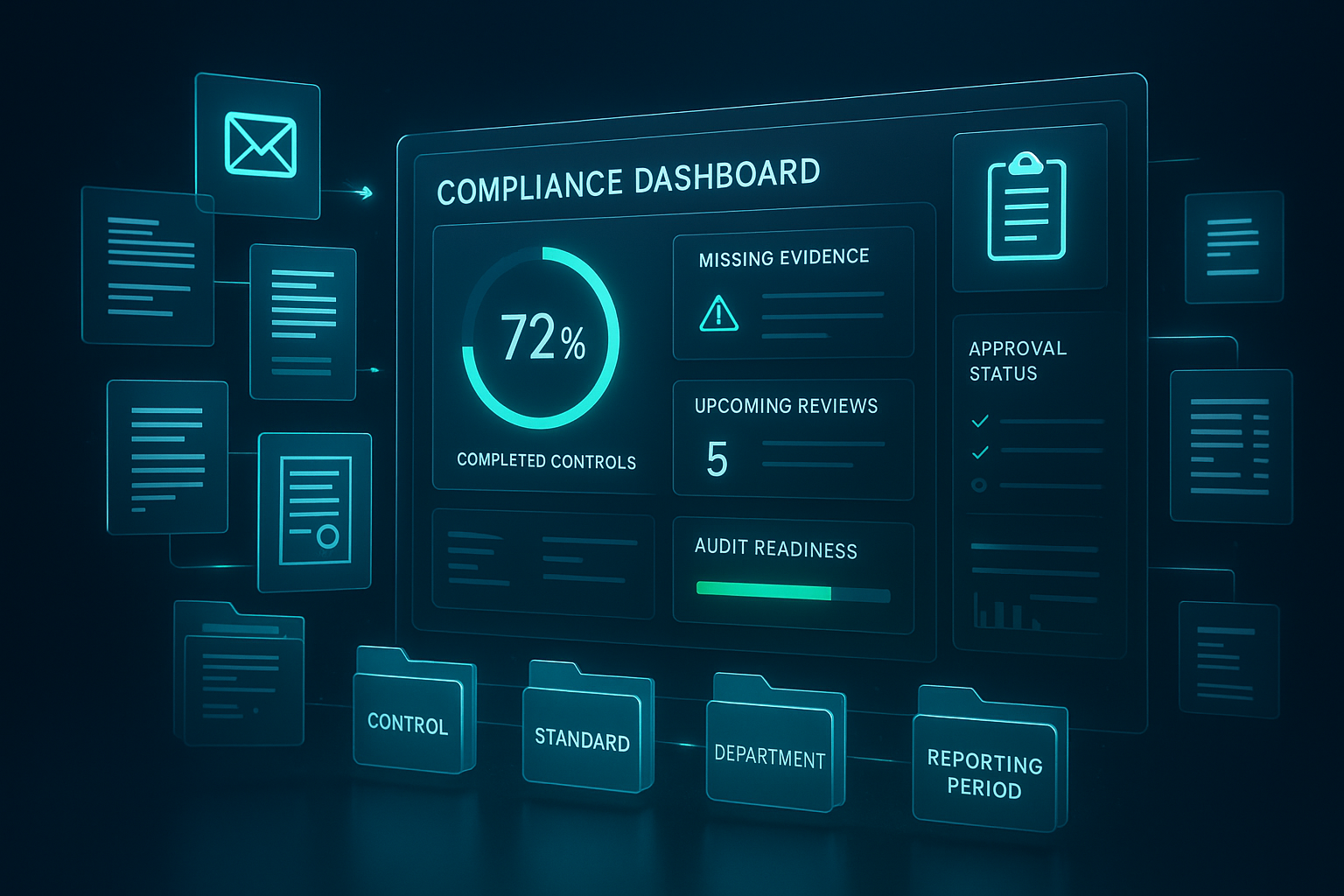
What's Included
Every purchase includes the complete business system blueprint.
Who It's For
Who this blueprint is built for, what you'll need to use it, and what it doesn't include.
Best for
Compliance teams, auditors, quality managers, and risk teams working with formal standards (e.g., SOC 2, ISO 27001, PCI DSS, HIPAA, GDPR) who want to automate evidence collection, control mapping, gap identification, and audit preparation.
What you'll need
In-house compliance knowledge — a compliance officer or CISO can run with the blueprint immediately — plus an engineering team to build the evidence-collection, classification, and control-mapping system. Requires access to the documents, policies, certificates, emails, reports, screenshots, and system records used as evidence.
What's not included
- No working GRC tool — no evidence-collection agents, document-classification engine, control-mapping system, or audit-file tooling is delivered.
- No custom build work — the buyer's team builds the platform from the blueprint.
- No underlying AI models or proprietary data — model access and your evidence and document data are yours to supply.
- Reference control mappings are a starting point — the blueprint includes mappings for common frameworks, but configuring controls to your specific standards and completing audits is the buyer's implementation work.
Deep Dive
A closer look at how EvidenceFlow AI works in practice, how it is implemented, and its architecture.
Workflow overview
EvidenceFlow AI supports compliance teams, auditors, quality managers, and risk teams that must collect and present evidence against formal standards such as SOC 2, ISO 27001, PCI DSS, HIPAA, and GDPR. In day-to-day use, evidence enters the system continuously as staff connect or upload documents, policies, certificates, emails, reports, screenshots, and system records. AI agents classify each item — identifying what it is and what it relates to — and map it to the relevant controls in the buyer's control set. The system tracks missing evidence, so the team sees exactly which controls are covered and which still lack supporting records, rather than discovering gaps at audit time. Compliance staff review the mapped items, add any missing coverage, and work approvals and review schedules that keep evidence current rather than collecting it once a year. An evidence status dashboard gives the team a live readiness picture, and secure evidence folders keep items organized and access-controlled. When an audit approaches, the system prepares organized audit files — assembled, labelled, and linked to controls — so the compliance team can hand the auditor a coherent package. Audit-readiness scoring summarizes how complete the evidence base is. The reference control mappings are a starting point; the buyer configures controls to its specific standards, and completing the audit itself remains the buyer's implementation work.
Implementation stages
EvidenceFlow AI is driven by the buyer's in-house compliance knowledge as much as by engineering. In the planning stage, a compliance officer or CISO defines the control set from the formal standards the organization must meet, using the blueprint's reference mappings for SOC 2, ISO 27001, PCI DSS, HIPAA, and GDPR as a starting point, and identifies the document and record sources that will supply evidence. The build stage — led by a compliance expert working with an engineering team — implements the automated evidence-collection agents, document classification, control mapping, missing-evidence tracking, secure evidence folders, approval workflows, review schedules, and the evidence status dashboard. During rollout, the system is populated with real evidence for a pilot set of controls, the team validates that classification and mapping produce accurate coverage, and coverage is extended to the full control set. The operate stage is a standing cycle: evidence flows in, agents classify and map it, staff review and approve, and the dashboard and audit-readiness picture stay current through the year so audits are a retrieval exercise rather than a scramble. No implementation timeline is assigned; pacing depends on the control set's size and the state of existing evidence.
Architecture overview
EvidenceFlow AI's architecture is a compliance-evidence system specified in blueprint form, organized around collecting, classifying, and mapping evidence to controls. The automated evidence collection component ingests documents, policies, certificates, emails, reports, screenshots, and system records from connected sources. A document classification engine uses AI agents (the compliance evidence AI team) to identify what each item is and what it relates to. Control mapping connects classified items to the specific controls in the buyer's control set, with reference mappings provided for common frameworks. Missing-evidence tracking records which controls lack supporting records, and an evidence status dashboard presents readiness at a glance. Secure evidence folders store items with access control, and approval workflows and review schedules keep evidence current. Audit preparation assembles organized, labelled audit files for handoff to auditors, supported by an audit-readiness view and compliance reporting. The blueprint specifies a subscription revenue model. No working GRC tool is delivered — no evidence-collection agents, classification engine, control-mapping system, or audit-file tooling; the buyer's team builds the system from the blueprint.
Frequently Asked Questions
Compare Products
See how EvidenceFlow AI stacks up against similar products.